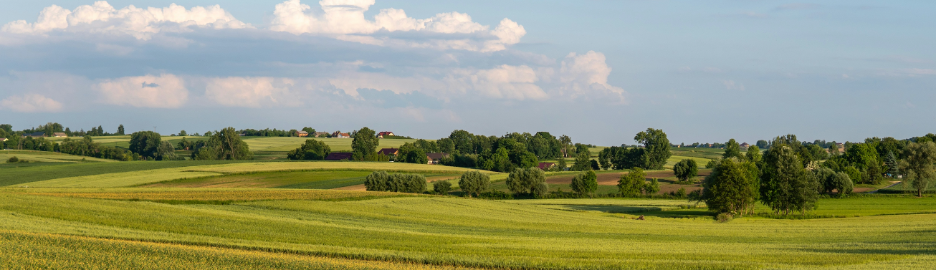
Fondaction Asset Management, the impact investing arm of Quebec, Canada-based pension fund Fondaction, and Dutch impact investor Triodos Investment Management have launched a €300 million (US$350 million) natural capital fund focused on scaling regenerative agriculture and close-to-nature forestry across Europe, Canada, and the United States.
Value Nature Fund I will invest in assets with the explicit goal of transitioning the entire portfolio to sustainable land management practices. As a founding investor, Fondaction has committed C$25 million (US$18 million) to the strategy.
According to the partners, the fund combines Fondaction Asset Management’s expertise in impact-driven investments across North American environmental markets with Triodos’ longstanding track record in European sustainable food and agriculture systems.
The Macroeconomic Context
Investors today are operating in a markedly different economic environment than just a few years ago. Persistent inflation, tighter financial conditions, renewed public market volatility, and geopolitical tensions—alongside the fragmentation of global value chains, particularly in agri-food and natural resources—are reshaping the parameters of asset allocation.
In this context, while many investors remain committed to climate and nature goals, resilience has become a structural priority.
As Fondaction Asset Management notes, the mandate increasingly centers on protecting portfolios from the erosion of purchasing power, reducing exposure to volatile markets, and stabilizing long-term returns. This helps explain the growing appetite for real assets and infrastructure, which offer more predictable cash flows, partial inflation protection, and lower correlation with public markets.
The Strategy
“Rather than treating nature as an externality,” Fondaction Asset Management explains, “Value Nature Fund I positions farmland and forests as real assets whose financial performance is directly tied to ecological regeneration.”
The strategy is grounded in the premise that regenerative business models can generate value across multiple dimensions: land appreciation, sustainably produced food and timber, carbon revenues, resilient farm infrastructure, and renewable energy production. These approaches also strengthen risk management at both the asset and portfolio level.
The portfolio will be geographically diversified across Europe and North America, targeting a 60/40 split, respectively. Approximately 70% will be allocated to agriculture (with deal sizes ranging from €5–20 million) and 30% to forestry (with deal sizes of €10–30 million).
The fund is expected to be classified as an Article 9 vehicle under the EU Sustainable Finance Disclosure Regulation (SFDR), with measurable impact KPIs across three pillars: biodiversity and ecosystem services, climate mitigation and adaptation, and social wellbeing.
A Global Shift
Value Nature Fund I reflects a broader global shift – not only in how institutional investors approach risk, but also in how businesses and governments define long-term value creation.
At the core of this shift is a growing recognition of the financial materiality of nature: both the value of natural capital and the risks associated with failing to account for it.
This perspective is increasingly being operationalized by major financial institutions. Notably, Norway’s sovereign wealth fund, managed by Norges Bank Investment Management, recently released its Nature Expectations guidance, outlining how portfolio companies should assess and reduce nature-related risks.
The launch of Value Nature Fund I also reinforces Canada’s leadership in this space. Earlier this month, Prime Minister Mark Carney announced the country’s first national Nature Strategy, aimed at protecting, restoring, and valuing nature as “a foundation of our economy, sovereignty, and well-being.”
“The launch of the Value Nature Fund reflects our commitment to strengthen transatlantic cooperation in natural capital investment and a concrete example on how we play our part to scale this asset class,” says the fund’s Investment Managing Director Philippe Crête. He adds, “It will also be a powerful tool to support Canada’s new Strategy on Nature. By mobilizing institutional capital from institutional investors into regenerative agriculture and climate‑positive forestry, we are translating strategic ambitions on nature into investable, scalable solutions. For Fondaction Asset Management and Triodos Investment Management, this is an opportunity to help anchor regenerative strategies in real assets that strengthen food systems, restore ecosystems, and deliver resilient returns.”
A Strengthening Signal
As capital continues to reprice risk and opportunity in a resource-constrained world, strategies like Value Nature Fund I signal where institutional investment may increasingly flow: toward systems that restore, rather than deplete, the foundations of long-term value.
”The Fund underscores a simple but powerful shift” says Crête, “nature is no longer a peripheral concern – it is becoming central to how markets define risk, resilience, and return.”
To learn more about Value Nature Fund, visit the website here.
Sarah Day Levesque is Managing Director at RFSI & Editor of RFSI News. She can be reached here.